Monday, 4 October 2010

Accidental Appropriateness

As if my own remarks hadn't already underlined how out of date I was when talking about limiting film locations in my entry yesterday, Steve Rose has published an article on the Guardian website about the very same thing. In my case I said that I couldn't think of many new films that use the location gimmick, whereas Rose's whole piece pours over the plethora of films that do exactly that. His opening gambit is really his only point:

Single-location thrillers used to be a chance for film-makers to show off their virtuosity in constrained circumstances, like Hitchcock's Lifeboat or Open Water, but now they're just starting to look like a cheap and easy way to get attention.

Anyway, the article is here.

To be fair, I wasn't talking about horror and thrillers which use a single room. I was talking about scriptwriters and filmmakers aiming for economy of place. Die Hard (1988) isn't set in one room, but the skyscraper and the surrounding area contain everything in a tidy fashion.

Sunday, 3 October 2010

This entry is seventeen years out of date, at least.


I am about to ask a lot of pointless questions, and I won't be following them up.

I’ve been thinking about the Die Hard scenario, by this I mean the novelty of a particular space being the site of a hostage scenario. It was a high-concept idea back in the late eighties and early nineties. The Die Hard series played out the ridiculous progression rather well, it went from, Terrorist’s hi-jack a skyscraper, to an international airport, to the city of New York, to the whole of the United States. In each film logic dictated that a New York cop (Willis) could resolve the situation in a slam-bang manner picking off the terrorists with a combination of absurd violence and swearing. I really like the films, although the third one isn’t much good, they shouldn’t have ditched the Christmas theme either, as without what felt like a violent fairytale aspect, they seemed like run-off-the-mill action films.

So Die Hard (1988), which was and is still a very good action film, spawned a slew of imitators, Die Hard on a boat (Under Siege(1992)), on a plane (Executive Decision(1996)), in a sports stadium (Sudden Death (1995)), in a hospital (Hard Boiled (1992)) and so on (although i'm running low on ideas).

The hostage narrative isn’t really much different from the siege or disaster movie, and you could lump films as unlikely as Phone Booth (2002) and 12 Angry Men (1957) into the mix. Essentially any film that is about the location more than the characters could be included. You might say that Phone Booth and 12 Angry Men were all about the characters, I mean the latter especially is a terrific ensemble and real issues as oppose to blowing up a plane with a Zippo lighter. But in all a lot of these films the characters have to be exceptionally ordinary. By this I mean they are exceptional, but they are defined completely by their relation to the location. Sometimes there will be average joes, and other times we will see supervillains/international terrorists (or what have you), holidaying priests, secret agents. But why were these films so popular? And for what reason are they out of favour? In recent years disaster films tend toward numerous locations (2012 (2009), The Day After Tomorrow (2004)), action movies all seem to be structured like globe-trotting bond films. At what size does a location lose its novelty? Die Hard just about held on to this location credibility in the turgid third film with the city setting, before throwing it out gleefully in the fourth film (which I liked better). The latter was a lot more fun, but it resembled the second Terminator film oddly enough. I can’t help but recall the remake of Assault on Precinct 13 (2005), which ditches the police precinct for a nearby wood, thus stripping the film of its central novelty. In any case it matters little, the film was lost by that point. How many locations can a film have before all are devalued?


Returning to Phone Booth, which was probably my favourite high-concept film of the last decade, I really loved how everything was arranged by the booth. Larry Cohen's script probably read like an asset and flaw for the producers, since it limits everything, but it kept the story tight, resulting in a perfectly watchable eighty or so minute film. Hell, one of my other faves of the last decade was United 93 (2006), which if it wasn’t based on a true story, probably would have been called a serious die hard on a plane. In both films, the novelty of the location actually enriches the characters, which are the typical focus of most films. So as much as I like the Bourne films, the characters merely trot around Europe from one fight or plot point to the next, with the spaces appearing as little for than convenient backdrops. Of course it helps that these are films about a character with a lack of character. This to me goes back to a real staple of the genre, North By Northwest (1959). This film makes little secret that its central character Roger 'O' Thornhill is empty inside (the ‘O’ stands for nothing, so he says). The locations that stitch together the plot matter little, but in place or a fight, or say another fight, or an interrogation, or a fight perhaps, Cary Grant’s character actually changes and develops positively.

Now i'm not knocking action films (well maybe a little), but it seems ironic that a firm grasp on a few locations, even in an exploitation film, can be a stage for engaging situations and characters. It's also ironic that the further cinema goes from theatre, which generally restricts action to a few locations, the worse a sense of place is conveyed. A big part of cinema has been to break away from Theatre, which I still think is the biggest influence on the medium. Theatre adaptations have been a major part of cinema for much of its existence, in response we get ideas like total cinema, where all elements of sound and vision work in harmony for a kind of full expression. But visual virtuosity and good storytelling don't always come together, and stagey films for all their flaws are often very pointed. Some of the best classic-era Hollywood films are fairly straight takes on theatre. I'm pleased that all of the major adaptations of The Front Page didn't tamper with the locations very much. Howard Hawks' His Girl Friday (1940) manages to be one of the quickest and funniest films and having a stable location really helps keep the audience in touch with the jokes and the plot. Can you imagine it being made in this manner today?


All of which brings me to my initial and stupid question. What is an appropriate setting for a Die Hard-type scenario? I'm in the library at the moment, and I couldn’t help but ponder if it would be ridiculous in a good or bad way. What possible reason could a character hi-jack such a place? I mean for instance Dog Day Afternoon (1975) depicted a bank robbery that fuelled by payment for an operation, so I suppose any scenario is possible. Once people are involved and not their jobs importance anything can happen. Just suppose an old fashioned style robbery of the staff and visitors was conducted but went wrong? Would the book novelty hold up? Or is the flaw of a library that all the floors look the same? What about a post office then? Surely that’s been done, hasn’t there been a film about the IRA 1916 Easter Rising which partially took place in a post office in Dublin? What about a leisure centre? Or a car park? For instance, imagine any location in any bond film, let’s say the multi-story car park in Tomorrow Never Dies (1997). Had the film revolved around that one location might we have been able to like any of the characters? Surely the Bond films have run out of new locations, isn’t a dramatic reduction the only place left to go? Anyway, there’s no point having a pop at a film series as facile as Bond, the whole point is that they are the same. At its very best it's good trash. But imagine for a moment describing an action film purely by its locations, surely an important aspect. These are just a couple of films I like, Die Hard becomes skyscraper and surrounding area film, The Killer (1989) is Hong Kong film set in posh homes, bars, car parks, the open sea, a church, a small apartment, a hospital. Thinking about this, I’d love to see versions of action films if the script was rewritten to only take place on one set, I wonder if it would make much difference, now that would be real armchair theatre.

To end this entry I’ll list a few places I’d like to see as central forthcoming films, they make have been done already of course. A cafe (i'm starting small), a music studio, a cinema, a bakery, a nail bar, a hardware store, a kitchen, a library, a warehouse, a penguin enclose in a zoo, Lucasfilm studios (preferably a zombie film for that one), a natural spring, a hedge. Maybe that’s enough. I suppose my next post will have to be about films with two novel locations.

(this will be edited for grammar and spelling, and coherence eventually)

Sunday, 12 September 2010

Chic Cheer


I've been listening to Chic all weekend, I don't have very much of their stuff, so You Tube has proven to be a goldmine. One of the real finds was this live recording from 1996 of "I Want Your Love". It was a historic night for the group because they were performing to celebrate the awarding of producer of the year for Nile Rodgers (Guitar). It turned out to be even more important for less jubilant reasons. Bernard Edwards (Bass) had fallen ill that day but insisted on playing, likely because of the trouble the group had gone to travelling to Japan with special guests. He clearly did not want to appear to be letting everyone down. Sadly he died that night from Pneumonia. His death makes this performance the last of its kind as he was co-producer, co-songwriter and co-founder of the group with Rodgers. Few had such a distinctive bass style, that's not to say the group do not continue to this day as a successful live act.

With that in mind one can't help but notice how subdued Edwards looks, but it isn't worth reading in to it too much, especially since he grooves with Rodgers so well in the breakdown. This live take on the song really builds to an intense climax. The horn section and Tony Thompson's drumming deserve to be singled out for credit. Look out for Prince-protege Jill Jones on secondary vocals. So, enjoy this performance live from Budokan.

Friday, 3 September 2010

Neu! '86 Review

A Music Review.

Below is a review that I have composed for amazon.co.uk (there wasn't one up yet). My thoughts on the release of their out-takes album got a bit out of hand. I don't really want to post an overlong review, especially since amazon reviews should be short and punchy. Excessive length hasn't stopped me in the past, but I think its for the best. Enjoy!


Neu! '86 is the long awaited fourth album by the brilliant and obscure (until about 2001) German group, Neu! It was recorded in the autumn and winter of 1985-86, hence its name. While it is very exciting to hear this music, it is actually the second release of the sessions. Without going deeply into the inter-group disagreements between Michael Rother and Klaus Dinger, the material was released by Dinger on a small Japanese label in 1995 under the title Neu! 4. That album was a real ragtag collection of music with several tracks sounding like different takes and mixes of one another. It was a mess but an engaging mess. Dinger appears to have thought that titling the album as '4' connoted the half-finished brilliance of Neu! 2, their second album. That album however, was a side of complete and enthralling music backed with a side of discordant non-music that was created in the studio to fill out the LP. Neu! 4 simply sounded unfinished, it was badly sequenced and left the impression of a rip off.

Neu! '86 then, made since the passing of Dinger, inevitably resembles Rother’s take on the album sessions. It is an unusual prospect of an album, akin (I imagine) to listening to Let It Be Naked, the Beatles revision of their final album, or one of Jimi Hendrix’s or Otis Redding’s posthumous albums. So, a cynical 1995 album gets a cynical 2010 re-release? That’s one view, but I don’t take it, for two reasons. First, there will always be people who hanker after demos and aborted sessions, and Neu! '86 at the very least prevents them from spending ridiculous amounts of money for music. Secondly, I think Rother has done a good job, I really do.


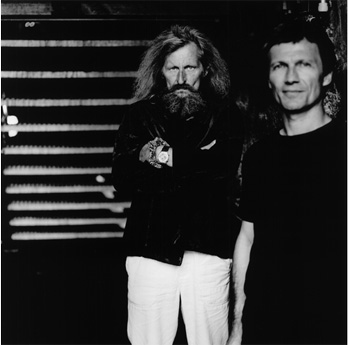
Young (in the 1970s)

Neu! '86 does one thing that the former incarnation does not, it sequences the music well and thereby presents the unfinished music in the best possible way. The first half of the album is arguably the better with the more finalised songs like 'Dänzing', 'La Bomba', 'Crazy' and 'Drive (Grundfunken)'. The second half has more fragments of songs, but these are short and multi-layered. Rother appears to have taken the master tapes and mixed together a lot of the material. Dinger had chosen to extend and expand this material. Again, I can see advantages and problems with each approach, but the difference is that Rother's is a better listening experience and a less repetitive record.

So what of the actual music, how does it fit with that of their three albums? Well, and this is, depending on your tastes what makes the album a failure or a success. The music is, to crowbar in and alter John Peel's summary of The Fall, different but the same. In places it sounds very of its time, the 1980s, with Synthesizers and Keyboards everywhere. These sound a bit cheap, and a little daft in their application. Yet, detractors should remember that Neu! '75, their third album had a lot of keyboards. Thankfully there is some very Neu! music to be found, 'Crazy', 'Drive' and 'Wave Mother' each have the smack and formula of Dinger's drums complemented with rock riffs and beautiful patterns of Rother's guitar. On the debit they sound a bit like minor homages to their trademark sound, and the short length of each is disappointing (the longest is six minutes). Vocals are prevalent on the album, which is probably the biggest difference. Dinger sings (i.e. shouts) over a lot of the music, much like he memorably did in the 1970s on 'Super', 'Lilac Angel', and 'Hero'. Those songs while defining and brilliant were complimented with long instrumental tracks, which in my opinion, were their forte. Neu! '86 ends up being a bit too talky, with sung songs from 'Dänzing' on down all having the same and therefore tiring sloppy, silly, and playful abandon. Neu! '86 just isn’t as majestic or mysterious as their best work.


Old (in 2001)

In summary, Neu! '86 is a good record. It isn’t seminal, and probably says more about music in the mid-1980s than it does about the music of Dinger and Rother. Taken with their other albums it is refreshing and different. It still sounds like Neu!, but it is the distillation of the rock ethos of side 2 of Neu! '75 with the synths of side 1 of that same record. In failing, Neu! ended up sounding truer to themselves than they perhaps realised. Try It.

By the way, I haven't posted it yet. But if accepted it will appear here.

Sunday, 1 August 2010

Knight Movies


Knight and Day is currently making the rounds on the billboards and buses of the UK. I'm no fan of Tom Cruise, and I certainly don't have much time even for his acclaimed performances such as his turn in Magnolia. For all intents and purposes his new film appears to have no ambition, other than to be a mild summer distraction. It doesn't look promising, and I don't really care for his co-star Cameron Diaz. But, I'm actually rather glad that determiningly average blockbuster fare still gets produced, rather than the barrage of 'event-pictures' that land each year. That said, seeing the Cruiser's creepy face pop up surrounded by explosions then racing off with Diaz had me recoiling in my cinema seat when watching the trailer earlier this year.

Instead, the most notable aspect of the film, for me, is its title: Knight and Day. Its a decidedly meaningless name, with a mild pun that could connote the overview of countless films. In fairness it has the semblance of meaning, as oppose to say, Made of Honour, which, I recall Mark Kermode asking with genuine sincerity something like: "does it mean anything? I don't think it does, but have I missed it?". What I really like is the the overworked word of Knight. A quick look at Imdb reveals numerous punning Knight films, such as: Knight Moves (1992) (its about chess duh!), Bachelor Knight (1947) (a retitling of The Bachelor and the Bobby-Soxer), A Knight in Camelot (1998), Street Knight (1993), Knight Club (2001) (looks particularly bad!), Devil's Knight (2003), there's also a load of 40s and 50s cartoons that use the pun, which points to the simplistic sophistication it carries. Unfortunately, this quick look hasn't brought up any Knight films with lead actors having Knight as their surname, that would underline the point almost too well!

When I first read about Tom Cruise's new film I thought about my favourite director Michael Powell. Prior to becoming a director, Powell worked doing pretty much every small job in cinema that could possibly be paid for. In the mid-1920s he took a job re-editing foreign silent films for the English market, one such film was A Knight In London (1928). Powell writes (or should that be knights?):
The film was screened. It starred Lilian Harvey and Robin Irvine and was directed by Lupa Pick. It was a comedy, a thin one, even its title, A Knight in London seemed to apologise for it. I could almost hear the pun being explained to its German producers: "Knight - keine Nacht ist, aber A Night in London ist nicht gut. Mit 'k' ist besser fur England." Then, desperately: It's a joke!" The polite blank faces nod hopefully. It is an English joke.
from page 194 of A Life in Movies.

What I like about this, is the sheer thinness of the joke, a play on the word night, that would require either a painfully literal film about a Knight, or a title that bears no relation to the content. In either case, ones expectations would be lowered. Who would honestly expect much from a film with a modern day setting which uses the word Knight in the title? Knightriders (1981) is the only one I'll excuse. I mean c'mon, knights on drag bikes, that's both literal and ridiculous. Not particularly funny, but at least it doesn't follow this synopsis:
June Havens finds her everyday life tangled with that of a secret agent who has realized he isn't supposed to survive his latest mission...

Knight and Day, at the level of its title is fails to be appropriate, funny, literal or diverting. Which all brings me back to my initial point, that the title of the film is the most interesting aspect about the film, by way of being anonymous. Good job!

Wednesday, 7 July 2010

Bad Music, Bad Movies

Film-makers are idiots, most of them are, or at least the people who choose the soundtracks are. Anyway, its someone's fault that music is often used in a revisionist manner. Let me explain.

I'm not sure where it all started but American Graffiti isn't a bad bet. What i'm talking about is the selective use of music in cinema to present a past where consciously good music exists. A case in point, American Psycho, not a bad film, having its cake an eating it with a critique of eighties materialism and style, while revelling in it. Famously, our 'hero' Patrick likes bad music, Huey Lewis. This is countered with 'good' music in the form of the early club scene, where we hear True Faith by New Order. I love New Order, and it is one of my favourite songs, but lets be a little more honest, the club should be playing dross. Apparently bad music doesn't exist in the imaginations of film makers unless they are consciously describing it as so. Look at Violent Cop, from 1989, where our club, which isn't a nice place, plays extremely loud dated house music.

For example, would it be easier to believe in the characters of a Wes Anderson movie, if each one didn't have such perfectly manicured taste? People like rubbish, we should stop pretending they don't.

British films can't escape this, and are arguably more guilty than most when it comes to neat musical use (Trainspotting, Withnail and I). This Is England, Shane Meadows' film about the presence of right wing politics, and skinhead culture in the north of England in the early eighties is a prime example. One scene in particular stands out for me with a stunning lack of imagination, when we see Shaun our lead, running home from school. He passes a newsagents that is blurting out the superb Tainted Love by Soft Cell. Yeah, Tainted Love; only one of the key songs of the eighties, a song that links 60s R&B to Northern Soul and Synth Pop. Once again, where is the rubbish that people had to sit through? Its too big a song for a small usage, it doesn't underscore a point, beyond, pronouncing that it is 1982. Admittedly, I have to give some kudos to the film-makers for including Since Yesterday by Strawberry Switchblade, even if it is the wrong year. (Have a look yourself at this link for a too good to be true playlist). My point, is that bad music, or at least critically derided music defines the past as well if not better than 'good' music. Now with a raft of nineties-set films coming out, i'm having to experience the musical revisionism in film that has plagued nostalgic films set in the previous decades. Expect to hear Paranoid Android rather than the Macarena.

I feel I must mention that I am not arguing that nostalgic soundtracks are fuelling this trend. It has gone on for a long time, and in the case of soundtracks, film soundtracks made up of new popular music have been around since the advent of sound-film. The Graduate is probably the film that kick-started that trend with its Simon and Garfunkel soundtrack (looks like the AC/DC Iron Man 2 CD isn't such a new idea after all). Commercial pressure is a part of it, but film-makers, mainstream or otherwise should know better, and any blame should rest at their feet.

At the present, the only use of music I can think of that uses 'good' and 'bad' well is episode two of the first series of the TV series Spaced. In that episode, Daisy and Tim are hosting a party. Daisy decides to kick things off by putting on her ten-year-old homemade cassette compilation. Tim's reaction sums up perfectly the reaction we should have: "What is this? This is rubbish. We should be listening to firm young melodies, kicking tunes, thumping bass... God I sound so stupid".


"Stop It!"

Tuesday, 25 May 2010

Great Movie Writing

This entry is an excuse to hold on to someone else's brilliant blog post. The original is at Media Slog, at this link: http://www.cneil.com/2009/05/most-impressive-line-of-prose-in-movie.html. So I can't take any credit.

The Most Impressive Line of Prose in a Movie Review

Brandon Fibbs wrote the following lines in a movie review:

This is another of those movies in which one character says the inevitable line, "You’re the most interesting person I’ve ever met" despite the fact that there is nothing whatsoever in the script to support the claim. Just once, I want that line to be uttered in a movie about a mid-19th century Amazon explorer who lost one of his arms to ravenous piranha and the other to pigmy cannibals and still managed to climb Mount Kilimanjaro blindfolded and backwards while wearing a tutu. Instead, it’s nearly always applied to exceedingly drab, near 30-something-year-old men wallowing in life’s doldrums and dead end jobs with absolutely zero ambition.

Writing just doesn't get any better than that.

This appeared in a review for an R-rated movie that I haven't seen and don't particularly want to publicize. However, I reckon you can search for it on his site.

Brandon Fibbs.com


Good? Average? Too Charlie Brooker? I liked it anyway.

Wednesday, 19 May 2010

The Mighty George Carlin

George Carlin was a great comedian. I didn't know him for stand up as I don't think he was really that well known for it in the UK. He'll always be Rufus from Bill and Ted's Excellent Adventure for me I suppose. Actually, you soon forget that admittedly brilliant film when you watch some of his stand up. Besides, as good as it is, his famous routine Seven Words You Can't Say on TV doesn't really play in the UK since you can hear them all occasionally. I don't think they have a watershed period on US TV, no wonder then that their top sitcoms can inoffensively run on UK TV at 7am in the morning.

Anyway, George Carlin died in Autumn 2008 at the age of 71, but it's never too late to try out his wonderful comedy, that mixes an anti-authority stance with terrific word play and speaking rhythms. While it is sad in hindsight, Carlin agreed in late 2007 to an extensive interview of his career. This remarkable interview is on You Tube in about 7 parts, and runs nearly three hours, it really is a mammoth trawl through his life. So here it is.

ONE


TWO and THREE


FOUR


FIVE


SIX


SEVEN

Monday, 8 February 2010

Family Plot - A 'Hitchcock'


Just saw Alfred Hitchcock's Family Plot (1976). It was his last film and not a bad way to conclude a fifty year career. A few things came to mind whilst watching it.

First of all, it's a lovely movie with a nasty edge, and also one that shows a great deal more humanity than many of his late-era works. The last time he allowed such warmth in his work was in small moments in Psycho or North By North-West. The two central couples are good together, and while the villains display a void of feeling bordering on aggressiveness, each pair spends time together that is portrayed as genuine as oppose to cynical. I certainly found the chemistry between the four to be more appealing than Paul Newman and Julie Andrews in 1966's Torn Curtain. I think the chemistry between even the villains is important for empathy. This connection with the characters pays off to the point in which I found myself asking whether I'd like William Devane's character Arthur to succeed. I mean, he had a bad childhood, and sure he's no Norman Bates, but I liked him.

Second. I really adore Bruce Dern. He's one of those actors that speaks with a such a comforting and warm voice. He is also a great physical actor and while perhaps rightly confined to small character roles and not star performances, he is excellent and unique in most roles I have seen of his. For example, Bruce Dern is the attraction in Silent Running. Compare that film with last years hit-science fiction film Moon, which centres around the performance of Sam Rockwell. I don't have a problem with small casts, but I could watch Dern intently while Rockwell was tiresome. (As a side note, Dern reminds me of Scott Walker for some reason).

Barbara Harris matches Dern well and they play off each other nicely, I see them as a better pair than even Cary Grant and Eva Marie Saint in North By North-West. What's really nice though, is the feel of the film as facilitated by the banter and adventures of these lead stars. I think they hark back to the funny couples of Hitchcock's British work.


Third. It is 'a Hitchcock'. But perhaps its the time period, or the small time locations, but it has the feel of a TV episode. I don't mean this in a bad way, Its just in passing I occasionally thought I was watching an episode of Qunicy! It's a Hitchcock in the sense that it recalls a few of his great movies. Strangers on a Train springs to mind, with the back and forth between our protagonists and antagonists.

What most pleased me, however, was that it is not a bloody spy movie, or a gimmicky movie. I liked The Birds, and its masterfully made, but it always feels like a follow-up to Psycho, meant to ride an outlandishness. Of course, Hitch has done that many times. As for spy movies, I thought that Torn Curtain and Topaz (the bits I could stay awake for) were inferior movies and and were far from his 'true calling'. The sixties were full of spy films, and the James Bond series led the way. A lot of those spy films were crass and had little substance, and most appeared to be merely an excuse to mix stunts with fights. Seeing Hitchcock films that aped Bond was a sad sight. Especially so since he had mastered the genre, and sent it up brilliantly with North By Northwest. I feel the same way about Michael Powell, who got stuck making episodes of the Espionage TV series in the 1960s and made a couple of bland war films in the 1950s.

Forth. Now, what I really did not like in Family Plot was the music. I wrestled with my thoughts on the matter, and I'm aware of my own tastes and the over exposure of John Williams (Spielberg films, Star Wars). A strong use of music is used in a lot of William's most effective and famous scores. But anyone who watched a lot of films in the last thirty years will be aware of how successful and influential Steven Spielberg was. As a child I even watched cartoon shows produced by Spielberg that had the Williams 'touch'. I am sick of his sound, and I didn't like it much in Family Plot.

The problem I have is not with the strong use, which is present in many of Hitchcock's best films. The problem is with Williams everything-but-the-kitchen-sink arrangements. Williams absolutely plasters the film, the instrumentation, has a full orchestra, electronic effects (Moogs?), sound-fx, harpsichords, and even choirs. Now, i'm not saying Hitchcock didn't want it, but it was a mess. And a saccharine one at that. I can't stand the 'Williams flute', the OTT flourishes. Williams scores like he is talking down to an audience, every device is trotted out, and you don't feel like your watching a 'movie', but you feel like your watching a generic movie. And, above all it doesn't feel assured or un-clichéd enough for a Hitchcock movie. To be honest, maybe i'm being a curmudgeon, since I was as quick to dismiss the non-Bernard Herman music in Torn Curtain too!

Music aside (and my own prejudice!) Family Plot is excellent, and as I watched, I felt happier that Hitchcock has not ended his career trying to outdo himself, but told a good story very well; not too long, slightly old fashioned perhaps, but fun, likeable, human and occasionally touching.

(i'll clean up the writing of this entry at some point, bit of a late night mess!)

Tuesday, 20 October 2009

Goodbye Cruel World


Lastfm is a funny thing. It has become one of those sites that people obsess over and an archetypal web 2.0 page. I'm about to wipe my page and start afresh.

This is from lastfm which is handily assembled by the site:
I'm into pop, rock, electronic, 80s and british, including:
New Order, Sparks, Saint Etienne, David Bowie, Orchestral Manoeuvres in the Dark, Depeche Mode, Mansun, The Clash, Kraftwerk, The Flaming Lips, Blur, Electric Light Orchestra, 久石譲, Devo, Scott Walker, Electronic, Creedence Clearwater Revival, Les Rita Mitsouko, Ramones, Daft Punk, My Bloody Valentine, Manic Street Preachers, Prince, Michael Rother, The Walker Brothers, Beastie Boys, Neu!, The Jesus and Mary Chain, Was (Not Was), Leonard Cohen, Mercury Rev, The KLF, Money Mark, The Divine Comedy, The Other Two, Donna Summer, Nick Drake, The Dandy Warhols, Pulp, Simple Minds, Tiger, The Velvet Underground, The Avalanches, John Powell, De La Soul, ABBA, The Beatles, Super Furry Animals, Elvis Costello & The Attractions, Kenickie.


That's four and a half years of listening.

My top 50 songs over these years appear accordingly:

01 Saint Etienne - "Burnt Out Car (Balearico Mix)", played 101 times
02 Sparks - "When I'm With You", played 92 times
03 Electronic - "Dark Angel", played 79 times
03 Elvis Costello & The Attractions - "Everyday I Write the Book", played 79 times
05 Orchestral Manoeuvres in the Dark - "Joan of Arc", played 78 times
06 Neu! - "Quick Wave Machinelle, played 77 times
06 The Other Two - "Selfish", played 77 times
08 Sparks - "Popularity", played 73 times
08 Electric Light Orchestra - "Calling America", played 73 times
10 Leonard Cohen - "First We Take Manhattan", played 72 times

11 The Divine Comedy - "Your Daddy's Car", played 71 times
12 Kanako Narikiyo - "Pajama Jama Da", played 70 times
13 Les Rita Mitsouko - "Le Petit Train", played 69 times
14 Saint Etienne - "Who Do You Think You Are", played 68 times
15 Devo - "Beautiful World", played 67 times
16 Orchestral Manoeuvres in the Dark - "Joan of Arc (Maid of Orleans)", played 64 times
16 The Other Two - "Innocence", played 64 times
16 New Order - "Bizarre Love Triangle", played 64 times
16 Creedence Clearwater Revival - "Run Through The Jungle", played 64 times
20 Orchestral Manoeuvres in the Dark - "Dream of Me (Based on Love's Theme)", played 63 times

20 Les Rita Mitsouko & Sparks - "Singing In The Shower", played 63 times
22 Saint Etienne - "I Buy American Records", played 62 times
23 Prince - "I Could Never Take the Place of Your Man", played 60 times
23 Saint Etienne - "Heart Failed (In The Back Of A Taxi)", played 60 times
23 David Bowie - "Never Let Me Down", played 60 times
26 Mercury Rev - "My Love", played 59 times
26 Electric Light Orchestra - "Stranger", played 59 times
28 David Bowie - "Ashes to Ashes", played 58 times
28 Sparks - "Angst in My Pants", played 58 times
28 David Bowie - "Sound and Vision", played 58 times

28 Saint Etienne - "Like A Motorway", played 58 times
32 Was (Not Was) - "Anything Can Happen", played 57 times
32 Daft Punk - "Face To Face", played 57 times
34 Sparks - "Funny Face", played 56 times
35 Orchestral Manoeuvres in the Dark - "Locomotion", played 55 times
35 Electronic - "Getting Away With It", played 55 times
35 David Bowie - "Strangers When We Meet", played 55 times
35 Saint Etienne - "Shower Scene", played 55 times
39 David Bowie - "Modern Love", played 54 times
39 Depeche Mode - "In Your Room", played 54 times

39 Sparks - "Just Got Back From Heaven", played 54 times
39 The Jesus and Mary Chain - "Head On", played 54 times
39 Devo - "That's Good", played 54 times
39 Electronic - "Twisted Tenderness", played 54 times
45 Electric Light Orchestra - "Four Little Diamonds", played 53 times
45 The Other Two - "Tasty Fish (Art of Mix Real Good Karma mix)", played 53 times
45 久石譲 (Joe Hisasihi) - "Hareta Hi Ni...", played 53 times
45 Girls Aloud - "The Loving Kind (Radio Mix)", played 53 times
45 Electric Light Orchestra - "Last Train To London", played 53 times
45 The Walker Brothers - "No Regrets", played 53 times

In the same format the top artists look like this:

01 New Order - 2,692 plays
02 Sparks - 2,639 plays
03 Saint Etienne - 2,513 plays
04 David Bowie - 1,944 plays
05 Orchestral Manoeuvres in the Dark - 1,689 plays
06 Depeche Mode - 1,672 plays
07 Mansun - 1,661 plays
08 The Clash - 1,558 plays
09 Kraftwerk - 1,500 plays
10 The Flaming Lips - 1,493 plays

11 Blur - 1,458 plays
12 Electric Light Orchestra - 1,289 plays
13 久石譲 (Joe Hisasihi) - 1,226 plays
14 Devo - 1,152 plays
15 Scott Walker - 1,031 plays
16 Electronic - 899 plays
17 Creedence Clearwater Revival - 733 plays
18 Les Rita Mitsouko - 712 plays
19 Ramones - 665 plays
20 Daft Punk - 657 plays

21 My Bloody Valentine - 626 plays
22 Manic Street Preachers - 622 plays
23 Prince - 609 plays
24 Michael Rother - 588 plays
25 The Walker Brothers - 573 plays
26 Beastie Boys - 567 plays
27 Neu! - 521 plays
28 The Jesus and Mary Chain - 480 plays
29 Was (Not Was) - 469 plays
30 Leonard Cohen - 460 plays

31 Mercury Rev - 452 plays
32 The KLF - 447 plays
33 Money Mark - 416 plays
34 The Divine Comedy - 415 plays
35 The Other Two - 412 plays
36 Donna Summer - 380 plays
37 Nick Drake - 376 plays
37 The Dandy Warhols - 376 plays
39 Pulp - 371 plays
40 Simple Minds - 368 plays

41 Tiger - 361 plays
42 The Velvet Underground - 352 plays
43 The Avalanches - 349 plays
44 John Powell - 344 plays
45 De La Soul - 338 plays
46 ABBA - 337 plays
47 The Beatles - 332 plays
48 Super Furry Animals - 326 plays
49 Elvis Costello & The Attractions - 320 plays
50 Kenickie - 315 plays

Good eh? But is it? I often wonder why I use the site. Originally it appeared to be a neat and slightly scientific way of finding out what music I like. I suppose you could argue that I liked it for the same reasons that I originally liked the TV programme Big Brother. That show seemed to lift-the-lid of what life is like, it was both a game show and an experiment. For example just how could you act on TV all the time?

However, like BB, lastfm became a habit as oppose to something you really wanted to do. It also began to affect my music choices. I mean, I would find myself checking my weekly charts to see what music i'd listened to most in the past week or month. This was satisfying since i'd been a bit of a chart watcher when I was a lot younger, It used to matter a great deal to me where Mansun and Blur singles charted on the UK Top 40. The problem I have is that I feel that if I like an artist I have to listen to them enough to get them on my lastfm chart. This means I went from listening to something because I liked it to wanting others to know (but mostly me) that I liked it. My other vice when using the site was and is my organisation of songs and artists and the adherence to correct titles. They simply have to be right!

Why do I and so many others feel the need to quantify that which is best qualified? I'd much rather tell someone what I like than direct them to a page of numbers.

So goodbye poorshakes of March 2005 to October 2009. Its best that you fade away and became what you always should have been; a question ("I wonder what music I like to listen to most often"). Significantly, it should remain a question that doesn't warrant an answer or an exact one anyway.

is a really great mix by the way, and I don't have it any more. That is all I have really learnt!